
In Brief
Sustainable merchandise is branded promotional merchandise made from recycled, renewable or responsibly sourced materials that is designed to be useful over the long term. The best eco-friendly promotional products combine durability with everyday practicality, helping organisations reduce waste while creating repeated brand exposure through products people genuinely keep and use.
What you’ll discover in the article
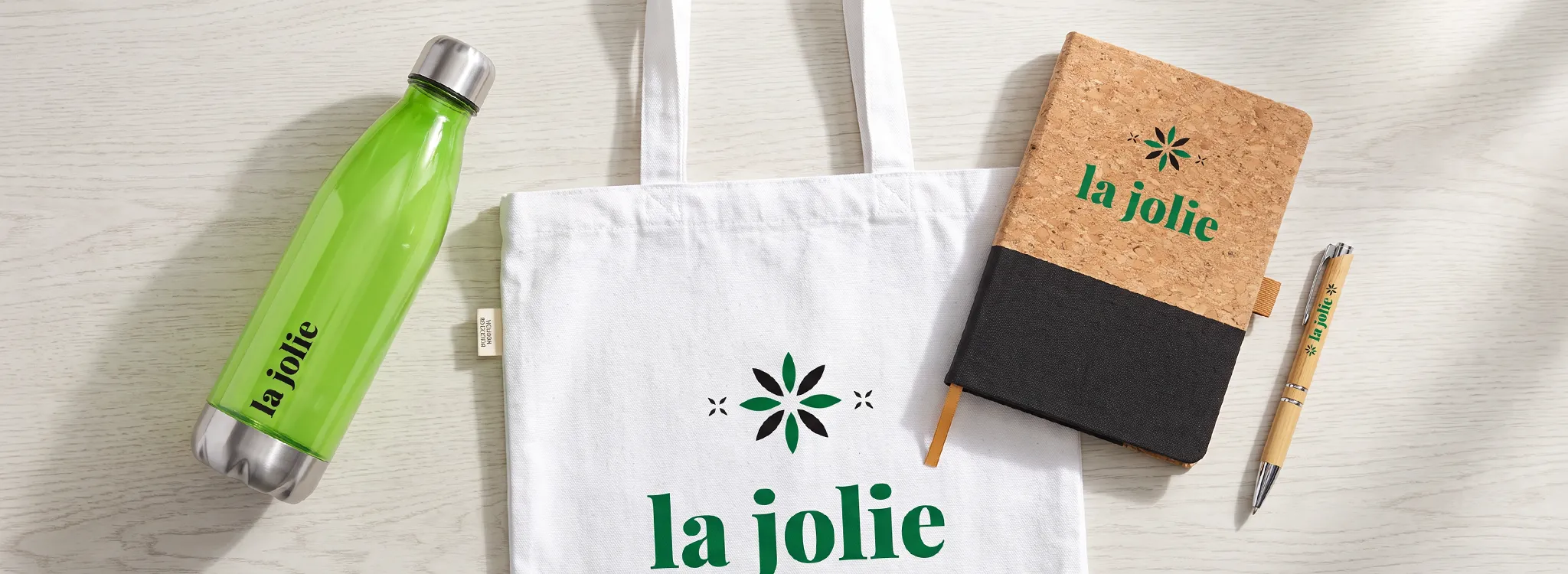
Sustainable merchandise enables organisations to promote their brand while making more environmentally responsible purchasing decisions. Rather than relying on disposable giveaways, businesses are increasingly choosing reusable bottles, recycled notebooks, cotton tote bags, bamboo pens and other eco-friendly promotional products that remain useful long after an event has ended.
The most effective sustainable merchandise isn’t defined solely by the materials it’s made from. Longevity, usefulness and quality all contribute to its environmental impact and marketing value. Products that become part of someone’s daily routine generate significantly more brand impressions than items that are quickly discarded. This guide explains how to evaluate sustainable promotional products, compares the most popular categories, highlights common buying mistakes and recommends practical solutions for organisations across education, healthcare, charities, corporate events and the private sector.
Sustainable Merchandise: The Complete Guide to Choosing Eco-Friendly Promotional Products
Sustainable merchandise is about making better long-term choices, not simply buying products labelled “eco”.
Walk around almost any exhibition, conference or university open day today and you’ll notice a clear shift in the promotional products people choose to take home. Disposable giveaways are becoming less common, while reusable bottles, recycled notebooks and cotton tote bags are increasingly filling delegates’ bags.
That change reflects a broader shift in the way organisations think about promotional merchandise. Environmental responsibility is now part of everyday business decision-making, and buyers are looking more carefully at how the products they distribute reflect their values. At the same time, they still need merchandise that delivers results, fits within budget and leaves a positive impression on customers, employees and event attendees.
Finding the right balance isn’t always straightforward. Terms such as eco-friendly, sustainable, recycled and carbon conscious are used widely throughout the promotional products industry, but they don’t always tell the whole story. A product made from recycled material isn’t automatically the most sustainable choice if it is unlikely to be used more than once. Equally, a premium reusable item that remains in daily use for several years may have a far greater positive impact than a cheaper alternative that is quickly forgotten.
Experienced promotional merchandise buyers therefore look beyond environmental claims alone. They consider how long a product is likely to remain useful, whether recipients will genuinely value it and how effectively it communicates the organisation’s brand over time.
That is why sustainable merchandise has evolved from being a niche product category into a smarter way of buying promotional products.
Whether you’re organising a conference, recruiting graduates, welcoming new employees, running a charity fundraising campaign or rewarding loyal customers, choosing practical products that people keep and reuse often provides better value for both your marketing budget and the environment.
If you’re beginning your search, browsing hotline™’s Eco Products collection is a useful starting point. It brings together a wide range of products made from recycled, renewable and responsibly sourced materials, making it easier to compare options before narrowing your shortlist. And because every order includes a FREE 20-minute Visual Proof™, you can see exactly how your logo will appear before production begins, giving you added confidence before placing your order.
Why sustainable merchandise matters more than ever

Choosing sustainable merchandise is no longer simply about responding to environmental concerns. It has become part of how organisations communicate their values, strengthen their reputation and make better purchasing decisions.
Customers, employees and event attendees increasingly notice the products they receive. A well-made reusable bottle or recycled notebook sends a different message to a disposable plastic giveaway. It suggests that the organisation has thought carefully about quality, usefulness and long-term value rather than focusing solely on the lowest possible cost.
There’s also a commercial advantage. Promotional merchandise works because it keeps a brand visible over time. The longer a product remains in regular use, the more opportunities it creates for people to see your logo. A cotton tote bag used every week for shopping or an insulated bottle carried into the office each day may generate thousands of impressions throughout its lifetime, making it significantly more effective than a novelty item that’s discarded after a single use.
For this reason, many experienced buyers now assess promotional products using three simple questions:
Will people actually use it?
Will they continue using it?
Does it represent our organisation well?
When the answer to all three is yes, the product is likely to deliver both environmental and marketing benefits.
The encouraging news is that sustainable promotional merchandise is now available across almost every budget. From affordable bamboo pens and recycled notebooks to premium insulated drinkware and organic cotton bags, organisations no longer have to choose between sustainability and practicality. The best campaigns successfully combine both.
How to Choose Sustainable Merchandise Like an Experienced Buyer
Selecting sustainable merchandise is rarely as simple as choosing the products with the strongest environmental credentials. Experienced buyers understand that the most effective promotional products sit at the intersection of sustainability, practicality, budget and brand impact.
The temptation is often to begin by comparing materials. Should you choose bamboo instead of plastic? Organic cotton instead of conventional cotton? Recycled PET instead of virgin polyester? While those questions are important, they’re only one part of the decision-making process.
A better place to start is with the people who will receive your merchandise.
Think about how they will use the product once they leave your event or workplace. Will it become part of their daily routine, or is it likely to end up in a drawer? A reusable bottle carried to work every day or a tote bag used for the weekly shop can continue promoting your organisation for years. By contrast, even the most responsibly manufactured product offers limited value if it is never used again.
This is why usefulness is arguably the most important sustainability measure of all.
A promotional product that replaces disposable alternatives or becomes a regular companion in someone’s working life often delivers both greater environmental benefits and a far stronger return on your marketing investment.
Budget also deserves careful consideration. Sustainable merchandise is available across a surprisingly wide price range, so the objective isn’t necessarily to spend more—it’s to spend more wisely. Many organisations achieve the best results by combining lower-cost everyday giveaways with a smaller number of premium items for clients, speakers or key stakeholders. This creates a balanced campaign that remains affordable without compromising perceived quality.
Branding should never be an afterthought either. The best products provide sufficient space for a logo to remain clear and attractive without overwhelming the design of the item itself. Clean, understated branding generally has greater longevity than oversized promotional graphics, particularly on products intended for everyday use.
Before committing to production, hotline™’s FREE 20-minute Visual Proof™ allows you to see how your artwork will appear on your chosen products. It is a simple but valuable step that helps ensure the finished merchandise looks exactly as intended, avoiding costly surprises and giving buyers greater confidence in their purchasing decision.
Ultimately, choosing sustainable merchandise is about finding products that people genuinely appreciate. When recipients continue using an item months or even years after they first receive it, your organisation benefits from ongoing brand exposure while supporting a more considered approach to promotional marketing.
At a Glance
| Feature | Recommendation |
| Best for | Events, exhibitions, employee engagement, education, charities and corporate gifting |
| Typical buyers | Marketing teams, HR, procurement professionals, event organisers and sustainability leads |
| Typical budget | £1–£20+ per item depending on product type and branding |
| Lead time | Allow 2–4 weeks for most branded eco products |
| Highest visibility | Reusable bottles, cotton bags and notebooks used every day |
| Best long-term value | Practical products that replace disposable alternatives |
| Most versatile products | Tote bags, notebooks, pens and reusable drinkware |
Comparing the Most Popular Sustainable Merchandise
No single product is the right answer for every campaign. The table below highlights the strengths of some of the most popular eco-friendly promotional products and the situations where they typically perform best.
| Product | Best Suited To | Typical Budget | Longevity | Brand Visibility |
| Reusable bottles | Staff, conferences, universities | ££ | Excellent | Excellent |
| Cotton tote bags | Exhibitions, retail, open days | £ | Excellent | Excellent |
| Recycled notebooks | Meetings, onboarding, training | £ | Very Good | High |
| Bamboo & recycled pens | High-volume giveaways | £ | Good | High |
| Reusable coffee cups | Employee gifts, client gifting | ££ | Excellent | Excellent |
| RPET lanyards | Conferences and events | £ | Very Good | High |
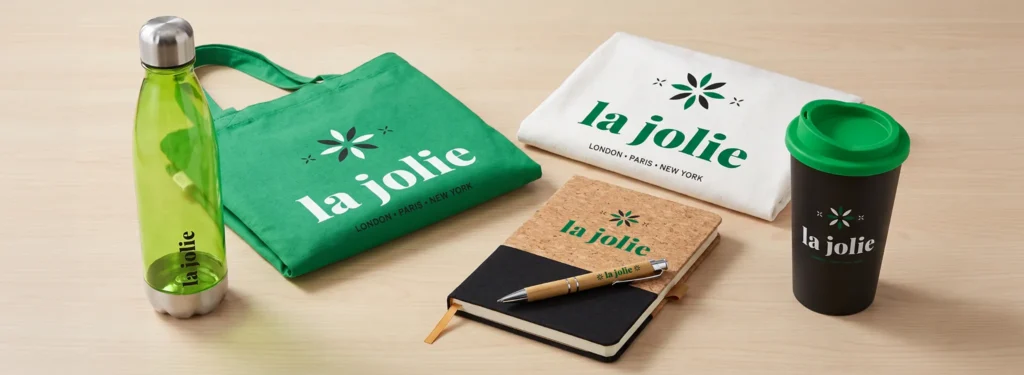
The strongest campaigns rarely rely on a single product. Instead, they combine complementary items that create a consistent experience while reinforcing the organisation’s sustainability message.
Reusable Drinkware: A Product That Keeps Working Long After the Event
Few promotional products demonstrate the value of sustainable merchandise better than reusable drinkware. Whether it’s a stainless steel bottle, an insulated travel mug or a recycled plastic sports bottle, these are products that naturally become part of everyday routines.
For employers, reusable bottles support workplace wellbeing initiatives while reducing dependence on disposable plastic. Conference organisers increasingly choose them as delegate gifts because they’re immediately useful during the event and continue promoting the organisation long afterwards. Universities also favour branded bottles during freshers’ fairs and open days, giving students a practical item they’ll carry across campus throughout the academic year.
One of the biggest advantages of reusable drinkware is its longevity. Unlike many traditional giveaways, a quality bottle or travel mug can remain in regular use for several years, providing repeated visibility for your branding wherever it’s taken.
If you’re considering drinkware as part of your campaign, it’s worth exploring hotline™’s range of branded mugs and bottles. The collection includes options suitable for everything from economical event giveaways to premium client gifts, allowing you to match the product to both your audience and your budget.
Cotton Tote Bags Continue to Deliver Outstanding Value
If one product has become synonymous with sustainable promotional merchandise, it is the humble tote bag.
Its appeal lies in its simplicity. Almost everyone finds a use for a durable shopping or carry bag, whether that’s visiting the supermarket, travelling to work, attending lectures or carrying documents between meetings. Because recipients use them repeatedly in public places, they also provide some of the highest levels of ongoing brand exposure available from any promotional product.
For exhibitors, tote bags solve an immediate problem by giving visitors somewhere to carry brochures, samples and other giveaways. Afterwards, they often become shopping bags, gym bags or everyday carry bags, extending the life of your branding well beyond the exhibition hall.
Modern promotional bags are available in a wide range of materials, including recycled cotton, organic cotton and RPET, making it easier than ever to align your product choice with your organisation’s sustainability objectives.
If your campaign involves exhibitions, conferences or retail promotions, browsing hotline™’s collection of promotional bags is an excellent place to begin. With numerous sizes, materials and branding options available, it’s easy to find a solution that balances practicality, durability and cost.
Sustainable Stationery Still Has an Important Place
Although workplaces are becoming increasingly digital, branded stationery continues to play an important role in promotional campaigns—particularly when it is designed to be useful rather than disposable.
Recycled notebooks remain popular because they’re relevant across almost every sector. Employees use them in meetings, students rely on them during lectures and delegates appreciate having somewhere to capture ideas during conferences and training sessions. When paired with a bamboo or recycled pen, they create an affordable but thoughtful giveaway that reflects a more environmentally conscious approach to promotional merchandise.
The beauty of sustainable stationery is that it combines everyday practicality with excellent branding opportunities. Every meeting attended, note taken or training session completed reinforces the visibility of your organisation in a subtle and professional way.
hotline™ offers an extensive range of recycled notebooks and branded paper products alongside eco-friendly pens and pencils, making it straightforward to build coordinated stationery packs that suit a wide range of events and budgets.
Sustainable Merchandise Works Best as Part of a Bigger Strategy
One of the most common misconceptions about sustainable promotional merchandise is that the environmental benefit comes solely from the materials used. In reality, the greatest impact often comes from thoughtful product selection.
An organisation that distributes thousands of inexpensive giveaways which are quickly discarded may inadvertently create more waste than one that invests in fewer, higher-quality products people continue using for years. The most successful campaigns therefore focus on longevity rather than volume.
This is why experienced buyers increasingly think in terms of complete merchandise strategies rather than individual products. They ask how different items complement one another, how recipients will use them after an event and whether each product genuinely supports the organisation’s objectives.
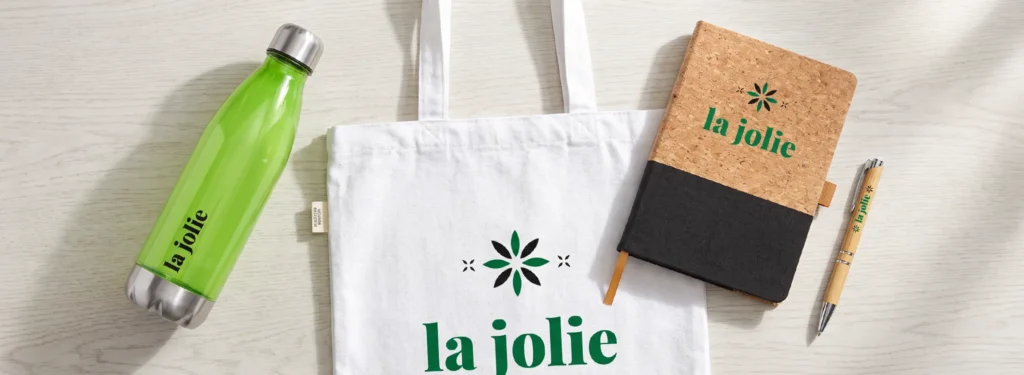
A conference delegate, for example, doesn’t necessarily need five unrelated promotional items. They are far more likely to appreciate a coordinated set comprising a reusable bottle, recycled notebook, bamboo pen and cotton tote bag. Each product has a clear purpose, works well alongside the others and reinforces a consistent sustainability message.
This approach creates a more professional experience for recipients while often delivering better long-term value for the organisation.
Choosing the Right Products for Different Sectors
Although the principles of good promotional merchandise remain consistent, different industries naturally have different priorities. Understanding those differences helps ensure your investment delivers the greatest possible impact.
Education
Schools, colleges and universities have embraced sustainable merchandise for everything from open days and freshers’ fairs to graduation ceremonies and alumni events. Students tend to value practical products that fit naturally into daily life, making reusable bottles, cotton tote bags and recycled notebooks particularly effective.
These products continue to be used across campus, in libraries and while travelling, giving institutions long-lasting visibility long after the initial event has finished. They also reinforce the increasingly important sustainability commitments many educational establishments are keen to demonstrate.
Healthcare
Healthcare organisations often look for merchandise that supports wellbeing while remaining practical for busy working environments.
Reusable drinkware is especially popular because it encourages hydration throughout the working day while reducing reliance on disposable cups and bottles. Recycled notebooks are equally valuable for training sessions, meetings and professional development events, while carefully chosen desk accessories provide useful additions to staff welcome packs.
For NHS Trusts, healthcare charities and community organisations, durable products generally offer a better return than novelty giveaways because recipients continue using them throughout their daily routines.
Charities and Community Organisations
Charities frequently need promotional products to work harder than those purchased by commercial organisations. Budgets are often limited, yet merchandise still needs to communicate professionalism while supporting fundraising and awareness campaigns.
This makes sustainable products an excellent choice. Cotton bags, reusable bottles and recycled stationery all provide practical value that supporters appreciate, encouraging them to keep using the items long after an event has ended.
Merchandise also becomes part of the charity’s wider story. Giving volunteers or supporters products that reflect responsible purchasing decisions helps reinforce organisational values in a subtle but meaningful way.
Corporate Events and Conferences
Business events remain one of the strongest opportunities for sustainable promotional merchandise.
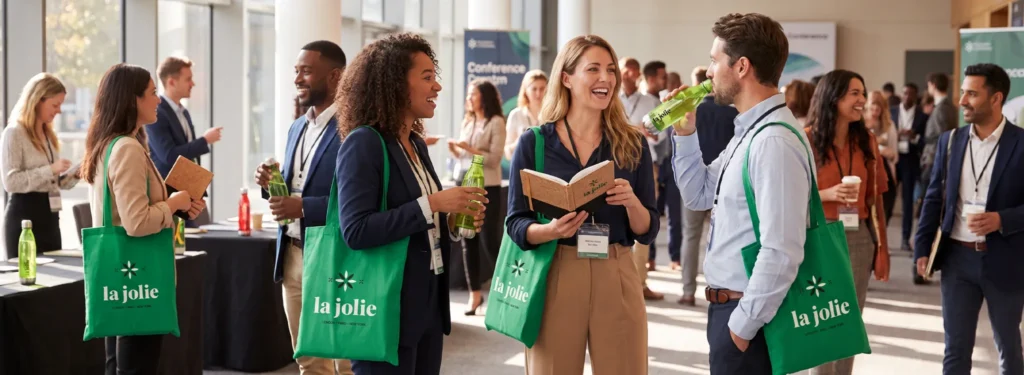
Conference delegates quickly accumulate brochures, business cards and marketing materials throughout the day, making reusable bags an obvious choice from the moment they arrive. Adding a quality notebook and pen provides immediate value during presentations, while reusable bottles encourage delegates to stay hydrated without relying on disposable plastics.
Rather than overwhelming attendees with numerous inexpensive giveaways, many organisations now focus on providing fewer, better-quality products that delegates genuinely appreciate. This approach often results in stronger brand recall because the merchandise remains useful well beyond the conference itself.
Manufacturing, Construction and Engineering
For organisations operating in industrial environments, durability often takes priority over novelty.
Employees working on site benefit from products capable of withstanding regular use, such as insulated bottles, travel mugs and robust notebooks. These items are practical during the working day and remain visible in workshops, vehicles and site offices, providing ongoing brand exposure without compromising functionality.
Selecting products that match the realities of the workplace is far more effective than choosing merchandise simply because it appears environmentally friendly.
Technology and Professional Services
Technology businesses, consultancies and financial organisations often use promotional products to strengthen client relationships, support recruitment or welcome new employees.
Here, presentation becomes particularly important. A coordinated welcome pack containing a premium insulated bottle, recycled notebook and sustainable pen immediately creates a positive first impression while reflecting the organisation’s commitment to thoughtful purchasing.
The emphasis is less on quantity and more on perceived quality, making carefully selected sustainable merchandise particularly well suited to these sectors.
Building Merchandise Packs That People Remember
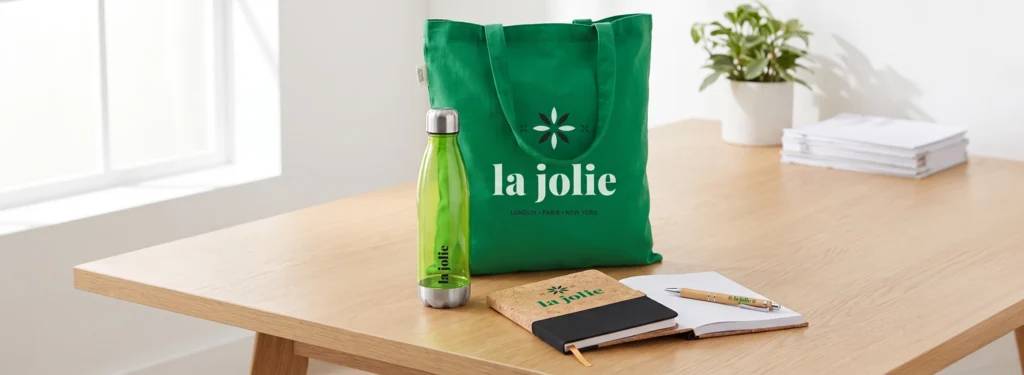
Some of the most successful promotional campaigns don’t revolve around a single standout product. Instead, they create a collection of complementary items that work together to deliver a better overall experience.
Imagine arriving at a conference and receiving a cotton tote bag containing a recycled notebook, bamboo pen and reusable bottle. Every item has an immediate purpose. The bag carries event materials, the notebook captures ideas, the pen is used throughout the day and the bottle remains useful long after the event has finished.
The same principle applies to employee onboarding. A thoughtfully assembled welcome pack containing reusable drinkware, sustainable stationery and practical desk accessories helps new starters feel valued while giving them useful products they will continue using every day.
Client gifting also benefits from this approach. Rather than sending a single promotional item, a carefully selected collection of premium sustainable products demonstrates greater consideration and often leaves a stronger lasting impression.
The key is ensuring each product complements the others. Merchandise packs should feel intentional rather than simply being a collection of unrelated branded items.
Common Buying Mistakes (and How to Avoid Them)
Even organisations with the best intentions can make decisions that reduce the effectiveness of their promotional merchandise.
One of the most common mistakes is focusing exclusively on environmental claims without considering how recipients will actually use the product. Sustainability should always be balanced with practicality. A product that remains in daily use for several years usually provides greater value than one made from environmentally friendly materials that is quickly forgotten.
Another frequent error is selecting merchandise based solely on unit price. While keeping within budget is important, the cheapest option isn’t always the most economical over time. Spending slightly more on products that recipients genuinely value often results in significantly greater brand exposure and a much stronger return on investment.
Leaving orders until the last minute can also limit your choices. Sustainable promotional products are available across a broad range of materials and branding methods, but allowing sufficient lead time gives greater flexibility and helps ensure the finished products meet your expectations.
Finally, many buyers underestimate the importance of artwork. Simple, well-balanced branding usually ages better than overly complex designs. Before production begins, hotline™’s FREE 20-minute Visual Proof™ allows you to review exactly how your logo will appear, helping you make informed decisions and reducing the risk of unexpected results.
Buyer’s Checklist
Before placing an order for sustainable merchandise, it is worth taking a few minutes to review the fundamentals. Organisations that achieve the best results rarely choose products on impulse; instead, they consider how each item supports their objectives, audience and budget.
Use this checklist as a final sense check before committing to your order.
✓ Have you identified who will receive the merchandise?
✓ Will recipients find the product genuinely useful?
✓ Is it likely to remain in use for months or years rather than days?
✓ Does it align with your organisation’s sustainability goals?
✓ Is the product appropriate for the type of event or campaign?
✓ Have you allowed enough time for production and delivery?
✓ Does your branding suit the available print area?
✓ Have you reviewed your free 20-minute Visual Proof™ before approving production?
Answering “yes” to each of these questions greatly increases the chances of choosing promotional merchandise that delivers long-term value for both your organisation and its recipients.
Why Seeing Your Branding First Makes a Difference
Choosing the right product is only part of the buying journey. Equally important is knowing how your branding will appear on the finished item.
A logo that looks excellent on screen doesn’t always translate perfectly to every product. Print size, positioning, colour contrast and branding methods can all influence the final appearance.
That’s why every hotline™ order includes a FREE 20-minute Visual Proof™.
Before production begins, you’ll receive a digital proof showing exactly how your logo will appear on your chosen merchandise. This gives you the opportunity to review the artwork, request changes if required and approve the design before anything goes to print.
For organisations ordering hundreds—or even thousands—of promotional products, this simple step provides valuable reassurance. It reduces uncertainty, helps avoid costly mistakes and ensures the finished products represent your brand professionally.
Whether you’re investing in reusable bottles for a conference, recycled notebooks for employee onboarding or cotton tote bags for a charity event, seeing your branding beforehand makes the ordering process considerably more straightforward.
Conclusion
The conversation around sustainable merchandise has evolved significantly in recent years. Today, it is no longer enough for promotional products simply to be made from recycled or renewable materials. Buyers are increasingly looking for merchandise that reflects their organisation’s values while continuing to deliver meaningful marketing results.
The strongest sustainable campaigns are built around products people genuinely want to keep. Reusable drinkware that replaces disposable bottles, cotton bags used every week for shopping and recycled notebooks that accompany meetings throughout the year all continue working long after the initial event has finished. They create repeated brand exposure while encouraging more responsible consumption—a combination that benefits both the recipient and the organisation behind the branding.
Ultimately, choosing sustainable promotional merchandise is about making thoughtful decisions rather than simply following trends. By considering your audience, selecting products with genuine everyday value and investing in quality that lasts, you can maximise the return on your promotional budget while supporting wider environmental objectives.
Whether you’re planning a recruitment campaign, preparing for an exhibition, welcoming new employees or organising a fundraising event, hotline™ offers a carefully selected range of eco-friendly promotional products to suit organisations of every size. From affordable everyday giveaways to premium branded gifts, there’s a sustainable option for almost every requirement.
If you’re ready to explore the possibilities, browse our Eco Products collection or speak to our team for practical guidance. We’ll help you compare products, recommend suitable options and, with our FREE 20-minute Visual Proof™, ensure you know exactly how your branding will look before production begins.
Frequently Asked Questions
What is sustainable merchandise?
Sustainable merchandise refers to promotional products made from recycled, renewable or responsibly sourced materials, or products designed for long-term reuse. The aim is to reduce waste while providing practical branded items that recipients are likely to keep and use regularly.
What are the most popular eco-friendly promotional products?
Some of the most popular options include reusable water bottles, cotton tote bags, recycled notebooks, bamboo pens, reusable coffee cups and products made from RPET. These items combine everyday practicality with strong branding opportunities and long product lifespans.
Is sustainable merchandise more expensive?
Not necessarily. Eco-friendly promotional products are available across a wide range of budgets. While some premium products cost more, many sustainable alternatives are competitively priced and often provide better long-term value because they remain in use for longer.
Which sustainable promotional products provide the best return on investment?
Products that become part of everyday life generally offer the greatest return. Reusable bottles, tote bags and notebooks continue displaying your branding every time they’re used, creating repeated impressions long after an event or campaign has ended.
How can I tell if a promotional product is genuinely sustainable?
Look beyond marketing claims. Consider the materials used, expected lifespan, practical usefulness and whether the product replaces disposable alternatives. A durable product used regularly is often a more sustainable choice than one made from recycled materials but quickly discarded.
Can I see my logo before ordering?
Yes. Every hotline™ order includes a free 20-minute Visual Proof™, allowing you to review how your logo will appear on your chosen products before production begins. This helps ensure you’re happy with the design and reduces the risk of unexpected results.